
Introduction
A plain wall can make even a beautiful room feel unfinished. That is exactly why many homeowners eventually ask what is wainscoting when they start exploring ways to make interiors feel richer, warmer, and more intentional.
At first glance, it looks like decorative wall paneling. But wainscoting does much more than decorate a room. It adds depth, protects lower walls from wear, and introduces architectural detail that can completely change how a space feels.
For centuries, designers have used this wall treatment in formal dining rooms, entryways, staircases, bedrooms, and even bathrooms. Today, it appears in both classic homes and modern interiors because it works across many styles without feeling outdated.
Understanding how it works, where it fits best, and which type suits your room helps you decide whether this design feature is simply decorative or something your home genuinely needs.


What Is Wainscoting and Why Is It Used?
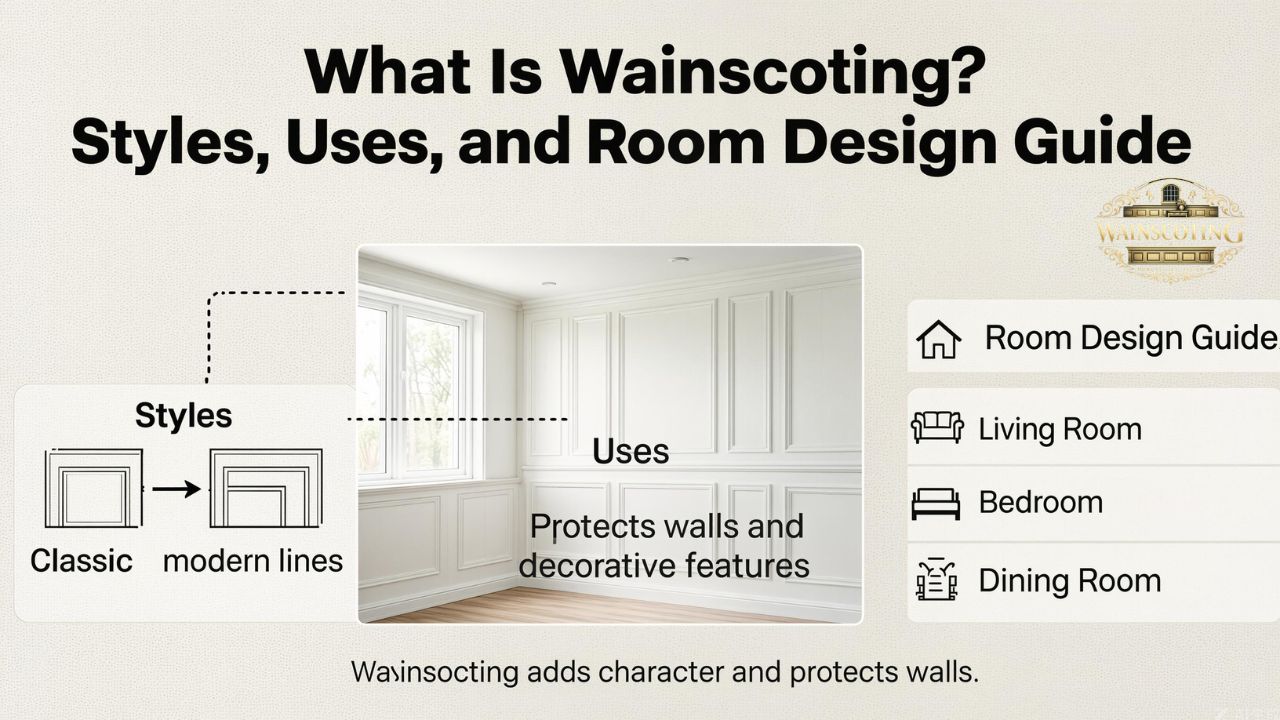
Wainscoting is a decorative treatment applied to the lower portion of interior walls. It usually covers the bottom third of the wall, though the height can vary depending on design style and ceiling height.
Historically, it began as a practical solution. In older buildings, stone or plaster walls often became cold, damp, or damaged. Wooden paneling was installed to create insulation and protect surfaces from daily wear.
Today, the purpose is broader. Homeowners use it for both function and visual balance.
Main reasons people install wainscoting
- Protect walls from scratches, furniture marks, and impact
- Add architectural detail to plain rooms
- Create visual proportion on tall walls
- Introduce texture without overwhelming color
- Increase perceived home value through finishing detail
In high-traffic spaces such as hallways or dining areas, lower walls often show damage first. Wainscoting acts like a durable shield while also improving appearance.
Why it still matters in modern interiors
Many trends disappear quickly, but wall detailing remains relevant because it creates structure. Even in minimalist interiors, a simple panel layout can make walls feel finished without clutter.
A room with no trim often feels flat. A room with carefully designed lower wall molding feels intentional.
The Historical Background Behind Wainscoting
The origin of wainscoting goes back several centuries in Europe. The word itself is believed to come from a type of imported oak once used for paneling.
Early versions were much heavier than modern wall trim. Large wooden boards covered walls to help retain warmth inside stone buildings.
Why old homes relied on it
Before modern heating systems, thick interior paneling reduced cold transfer from exterior walls. It also prevented moisture damage in older masonry construction.
Over time, wealthy homes began turning practical wood paneling into decorative craftsmanship.
From necessity to design statement
By the eighteenth and nineteenth centuries, detailed panel patterns became symbols of elegance. Formal rooms often featured raised wood panels, elaborate molding, and painted finishes.
That tradition still influences many homes today, even when materials are lighter and installation is easier.


6
Common Types of Wainscoting Used in Homes
Not all wall paneling looks the same. The style you choose changes the entire mood of a room.
Raised panel wainscoting
This is the most formal style. Panels project outward and usually include detailed molding.
It works well in:
- Formal dining rooms
- Traditional hallways
- Classic living rooms
- Large entry spaces
Flat panel wainscoting
This version looks cleaner and more modern. Instead of raised sections, panels sit flat inside molding frames.
It suits:
- Contemporary interiors
- Bedrooms
- Offices
- Minimalist homes
Beadboard wainscoting
Beadboard uses vertical grooves and narrow boards. It feels relaxed and practical.
Popular spaces include:
- Bathrooms
- Laundry rooms
- Kitchens
- Cottage interiors
Board and batten
This style uses wider vertical strips and strong lines.
It is often chosen for:
- Farmhouse interiors
- Mudrooms
- Staircases
- Accent walls
Overlay panel designs
Overlay designs add decorative trim directly over smooth wall surfaces, creating custom patterns.
This option is often budget-friendly while still delivering strong visual impact.
Ideal Height for Wainscoting in Different Rooms
One common mistake is choosing height without considering room scale.
Standard height range
Traditional installations usually cover one-third of the wall height.
For example:
- 8-foot wall → about 32 inches
- 9-foot wall → around 36 inches
When taller wainscoting works better
Higher paneling can work in spaces where you want stronger architectural impact.
Examples:
- Dining rooms with tall ceilings
- Stair walls
- Long corridors
Height rules that improve visual balance
A useful rule is letting furniture influence panel height.
If chair backs sit near the panel line, proportions often feel more natural.
What Is Wainscoting Best Used for in Modern Homes?
People often think it belongs only in formal houses, but modern homes use it very differently.
Entryways
The first wall visitors see often sets the tone. Wainscoting adds immediate structure.
Dining rooms
This remains one of the most common spaces because chairs naturally justify wall protection.
Bathrooms
Moisture-resistant materials make paneling practical and attractive in powder rooms.
Bedrooms
Soft wall detailing behind beds creates calm depth without needing heavy decor.
Staircases
Long stair walls often look empty. Panel divisions solve that problem elegantly.
Materials Commonly Used for Wainscoting
Material choice affects cost, durability, and installation method.
Solid wood
Real wood remains premium but costs more and requires finishing.
MDF
Medium-density fiberboard is widely used because it paints smoothly and stays stable indoors.
PVC panels
These are popular in bathrooms because they resist moisture.
Plywood systems
Budget-conscious projects often use plywood plus trim molding.
Which material lasts longest?
For dry indoor rooms, MDF performs very well. For wet zones, PVC usually lasts longer.
How Wainscoting Changes Room Perception
Walls influence how large or small a room feels.
Vertical patterns increase visual height
Board and batten naturally draw the eye upward.
Horizontal trim adds width
Wide panel layouts can make narrow rooms feel broader.
Painted contrast creates depth
Dark lower panels with light upper walls often create stronger dimension.
Best Paint Colors for Wainscoting
Color choice determines whether the wall detail disappears quietly or becomes a feature.
Popular choices
- Soft white
- Warm ivory
- Greige
- Sage green
- Charcoal gray
Same color vs contrast
Painting wall and panel same color creates softness.
Using different shades creates stronger separation.
Matte or satin?
Satin usually works best because lower walls need easier cleaning.
Is Wainscoting Expensive?
Cost depends on material, labor, and pattern complexity.
Basic DIY range
Simple trim layouts often cost much less than full raised panel systems.
Professional installation costs more because
- Measurements must stay exact
- Corners need precision
- Wall irregularities require correction
What affects budget most
Raised detail increases labor more than material.
DIY vs Professional Installation
Many homeowners ask whether they can install it themselves.
DIY works best when
- Walls are straight
- Design is simple
- Tools are available
- You have patience for measuring
Hire a professional when
- Walls are uneven
- Corners are difficult
- Custom symmetry matters
What Is Wainscoting Compared to Other Wall Treatments?
People often confuse it with paneling or molding.
Wainscoting vs beadboard
Beadboard is one type of wainscoting, not a separate category.
Wainscoting vs full wall paneling
Wainscoting covers only lower wall sections.
Wainscoting vs molding
Molding is trim detail. Wainscoting includes larger wall coverage.
Design Mistakes to Avoid
Installing too high in small rooms
This can make ceilings feel lower.
Using overly complex patterns in tight spaces
Simple lines usually work better.
Ignoring room style
Traditional raised panels may feel heavy in ultra-modern interiors.
FAQ
What is wainscoting made from?
It is commonly made from MDF, wood, PVC, plywood, or composite trim materials depending on room conditions and budget.
What is wainscoting used for in bathrooms?
It protects walls from splashes while adding decorative detail that makes bathrooms feel more finished.
Can wainscoting make a room look bigger?
Yes, vertical styles can create height, while balanced panel layouts improve proportion.
Is wainscoting old-fashioned?
No. Modern flat-panel designs work extremely well in contemporary homes.
Should wainscoting be darker than the wall?
Not always. Matching colors can create a softer, more seamless look.
Does wainscoting increase home value?
Well-installed architectural detail often improves visual appeal and buyer perception.
Can you install wainscoting over drywall?
Yes, most modern systems are installed directly over finished drywall.
What rooms should not use wainscoting?
Very small cluttered rooms may feel crowded if panel design is too heavy.
Conclusion
Once you understand what is wainscoting, it becomes clear why it remains one of the most reliable wall upgrades in interior design.
It solves two problems at once: walls become more durable, and rooms gain architectural character without major renovation.
Whether you choose beadboard for a bathroom, flat panels for a bedroom, or classic raised trim for a dining room, the result often feels far more expensive than the actual material used.
The strongest designs are usually the simplest ones—clean proportions, thoughtful height, and a finish that fits the room naturally ✨🏡📐